
From Vessel Fabrication
to Glass-Lined Equipment
Glass-lined reactor manufacturing brings vessel fabrication, welding, enameling, machining, assembly and inspection into one controlled production sequence.
Each stage must remain coordinated with the required vessel geometry, process interfaces and final equipment configuration.
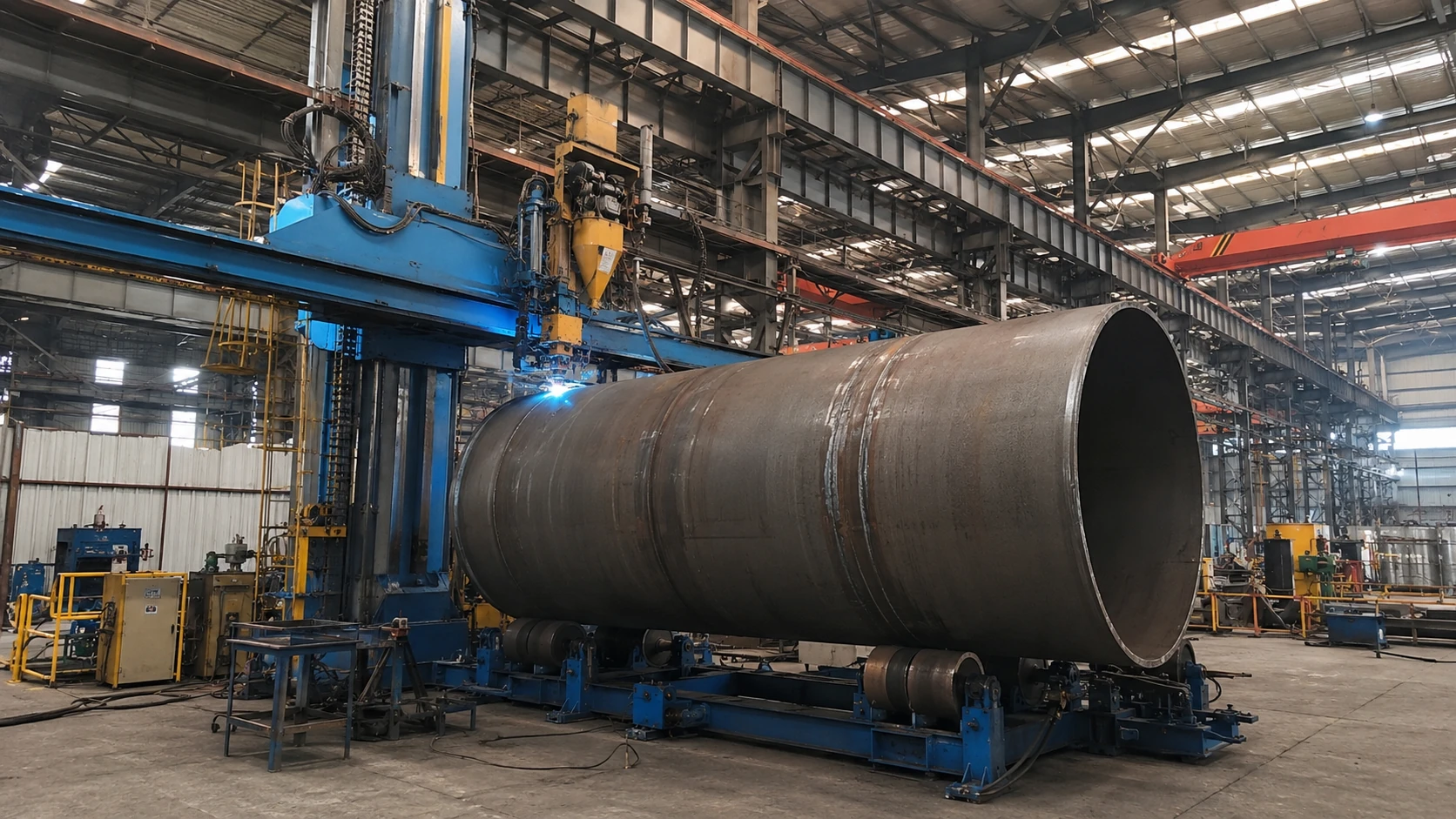
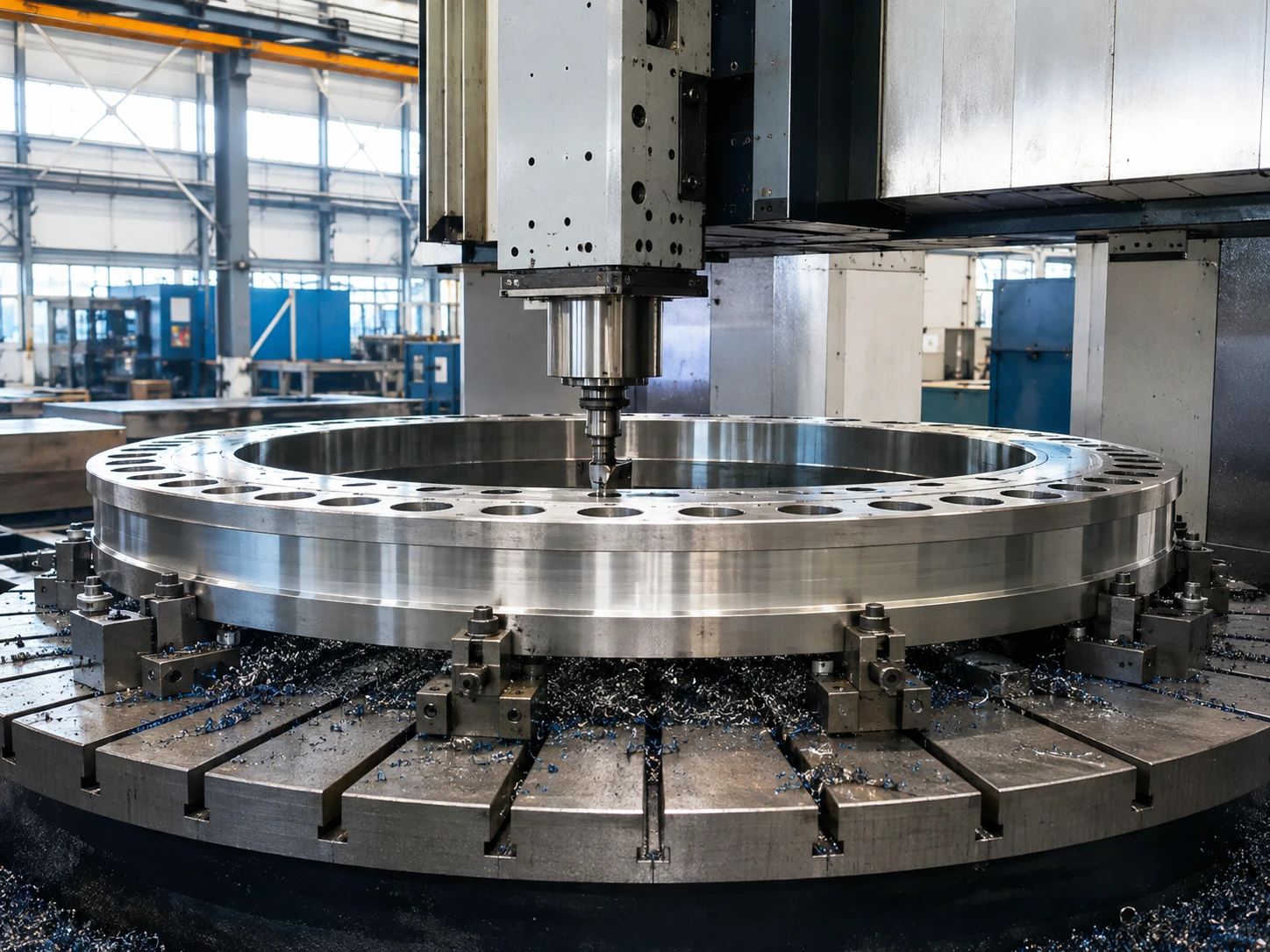
One production chain, multiple controlled stages.
Glass-lined equipment manufacturing combines steel-vessel fabrication, welding, enamel processing, machining, assembly and inspection. Each stage affects the dimensional condition, process interfaces and final equipment integrity.
From vessel to finished equipment.
The production sequence connects the vessel body, glass-lined surfaces, components and final records.
Welding
Complete vessel joints, nozzles and structural assemblies.
Assembly
Integrate vessel, agitation, access and service components.
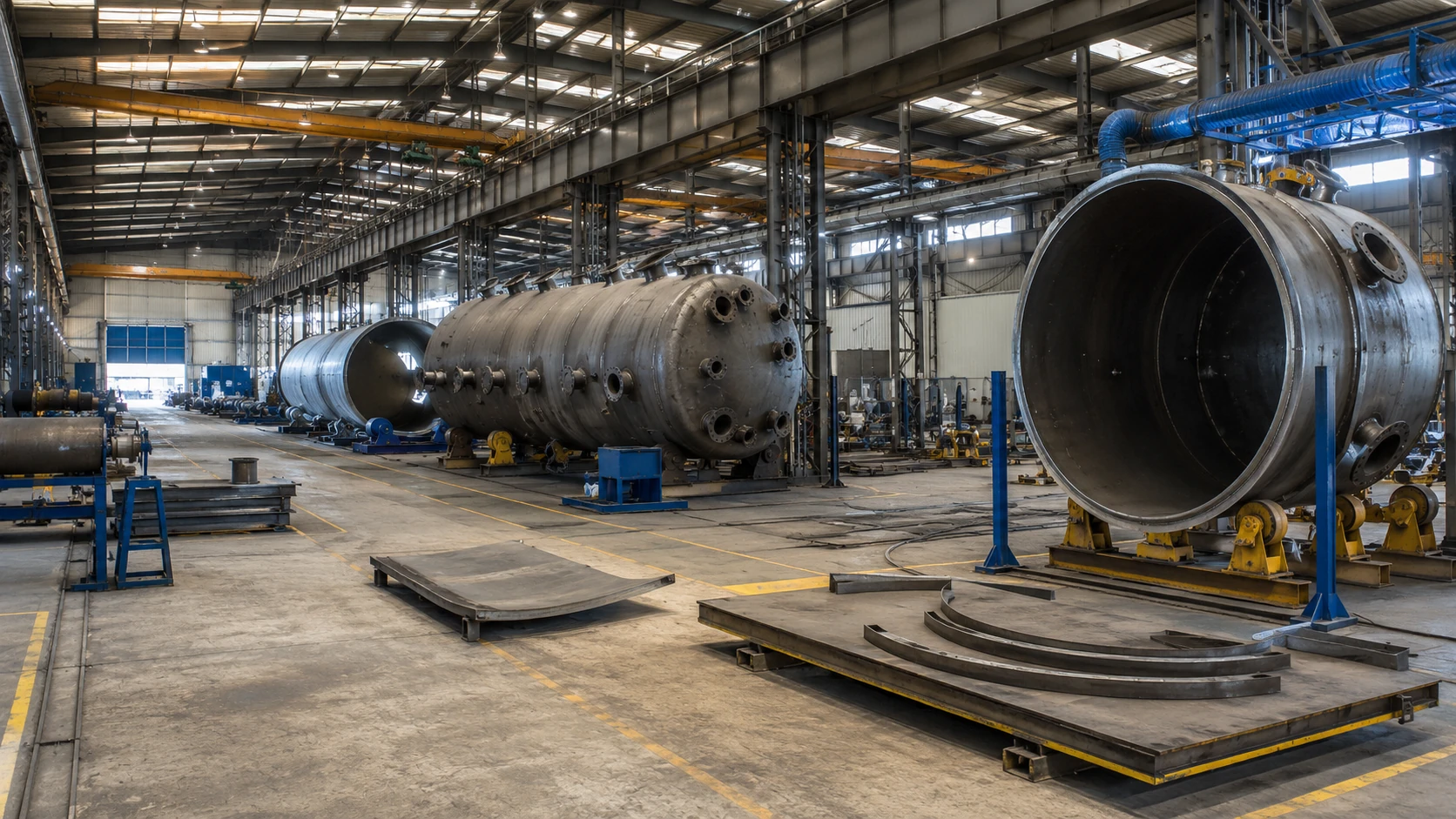
Build the vessel before building the equipment package.
The steel vessel body and its structural assemblies establish the geometry that later stages must preserve.
- Vessel-body fabrication and preparation
- Welded structural assemblies
- Nozzle and connection coordination
- Preparation for subsequent enamel processing
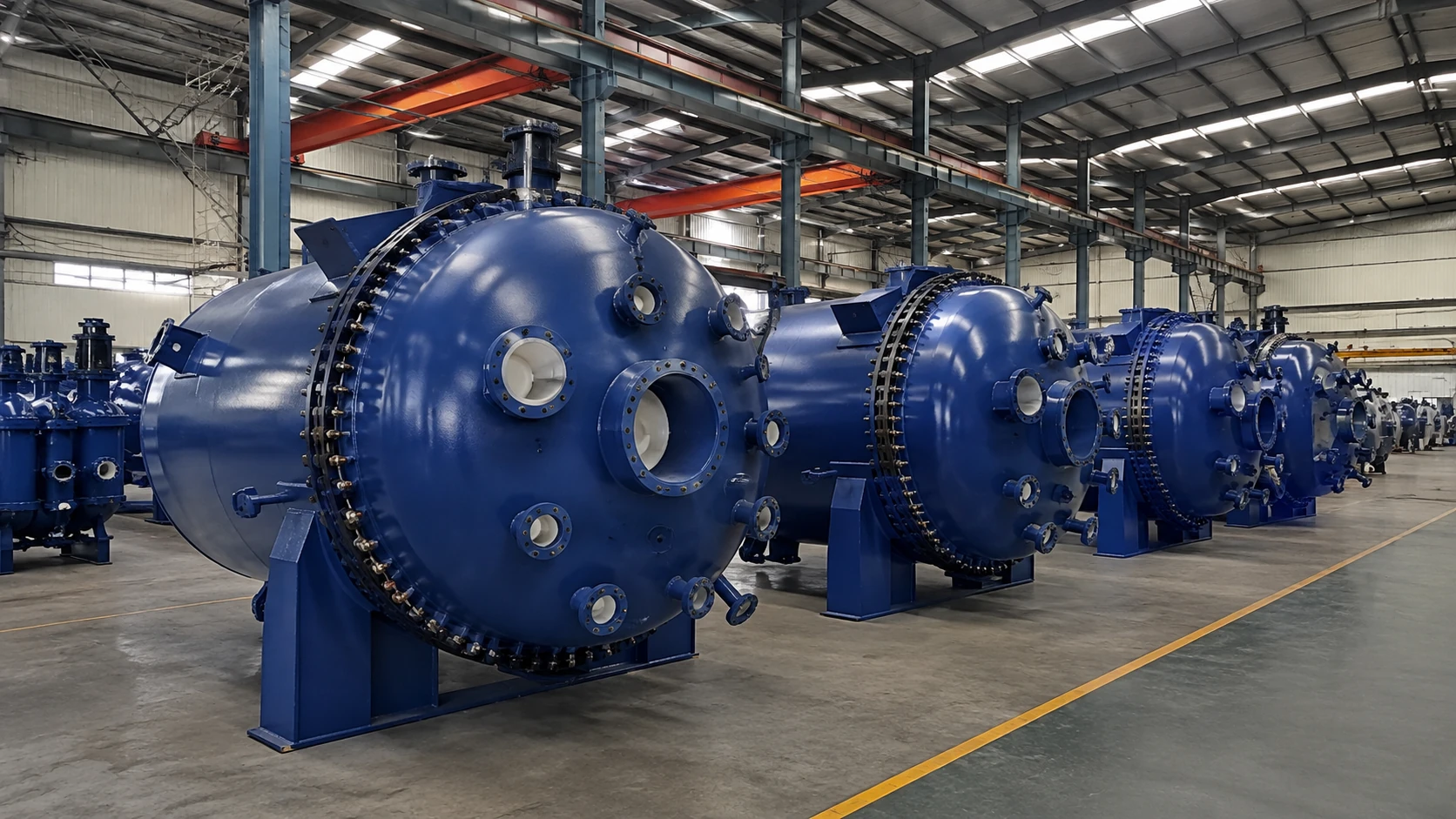
The defining manufacturing stage for glass-lined equipment.
Dedicated enamel processing creates the glass-lined product-contact surface on vessels and relevant components before final assembly.
- Glass-lined product-contact surface
- Dedicated enamel processing
- Vessel and component processing
- Preparation before final assembly
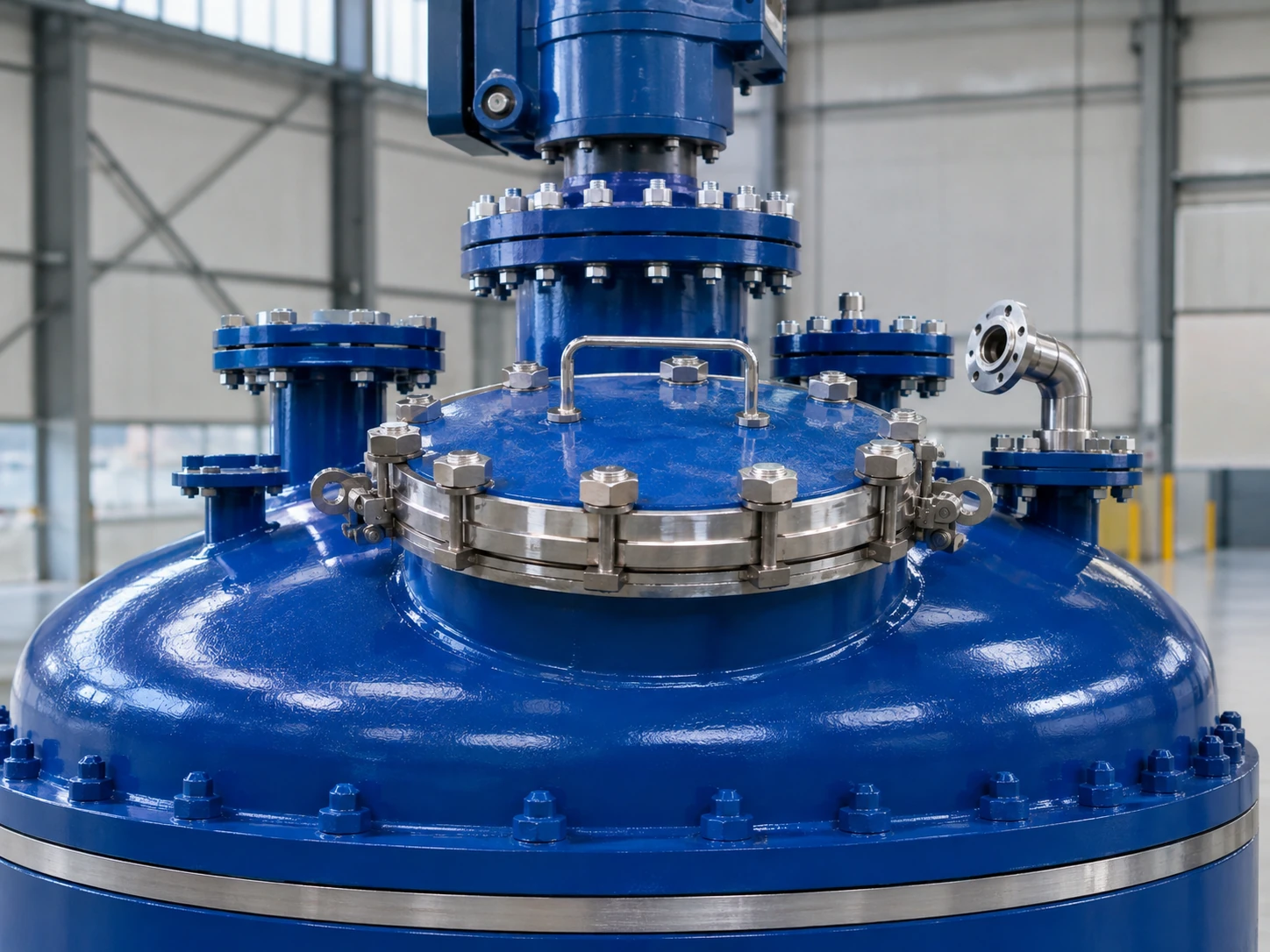
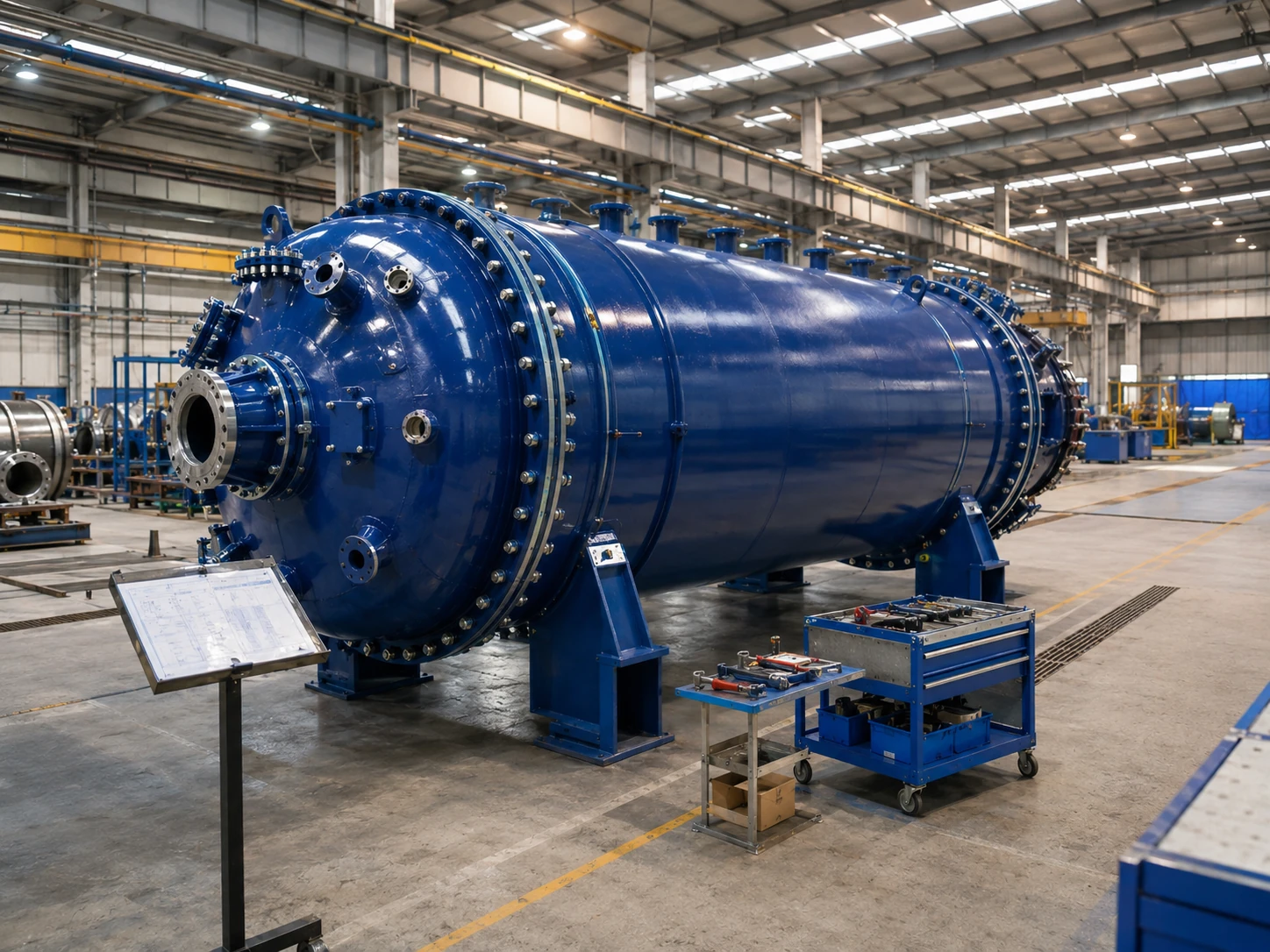
Bring components together with controlled interfaces.
Machined parts, drive interfaces, access points and service connections are brought together as a complete equipment package.
- Machined components
- Agitator and drive interfaces
- Access points and service connections
- Final fit and assembly
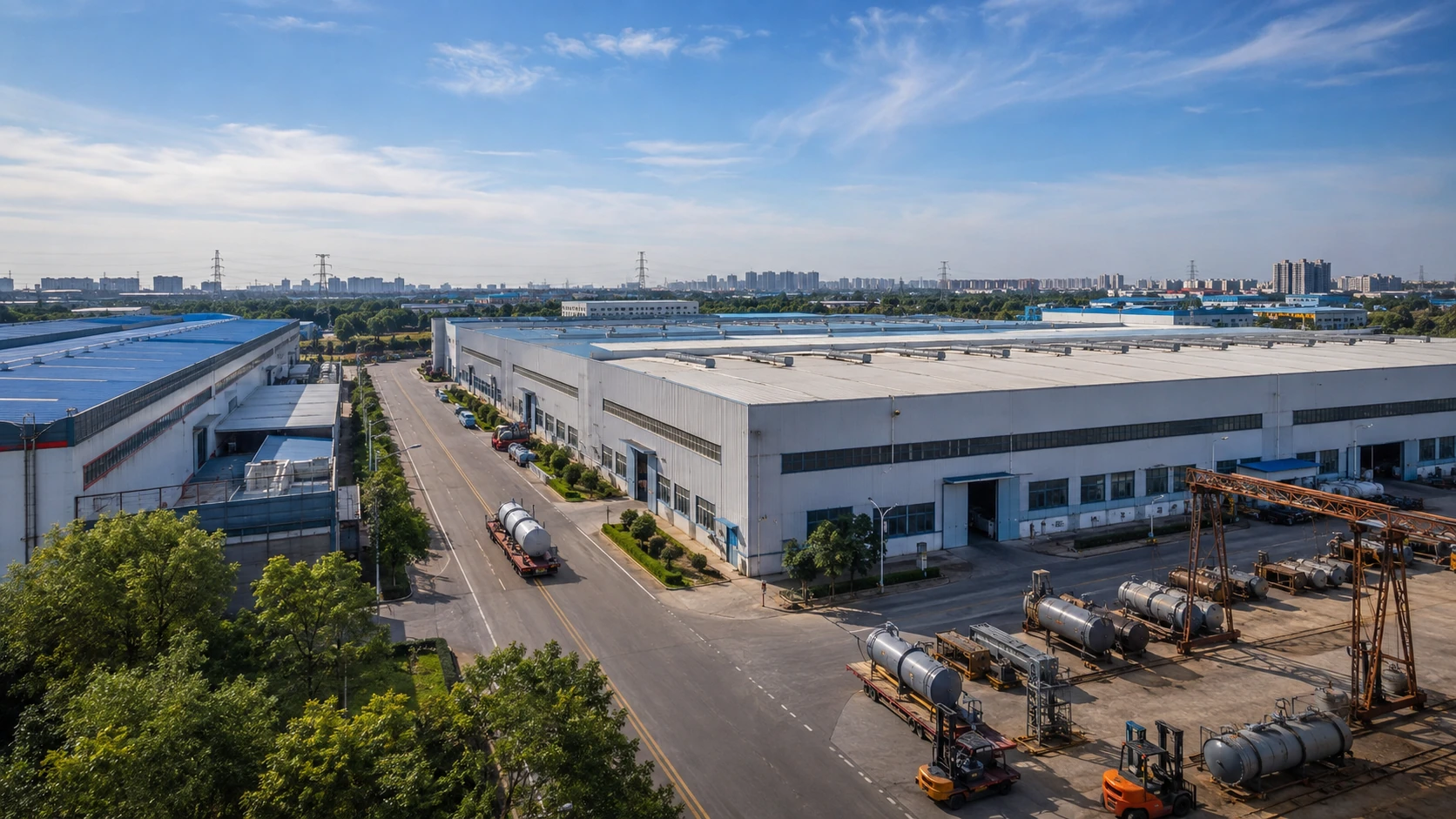
Production areas in context.
Production areas supporting fabrication, enamel processing, welding and final equipment preparation.
Control the finished equipment before release.
Final checks keep the finished vessel, glass-lined surfaces, interfaces and records aligned with the project requirements.
Configuration Control
Verify the finished equipment against the agreed project configuration.
Glass-Lined Integrity
Inspect product-contact glass-lined surfaces and relevant components.
Mechanical Interfaces
Check connections, access points, supports and assembly interfaces.
Project Documentation
Organize the technical and inspection records associated with the equipment.
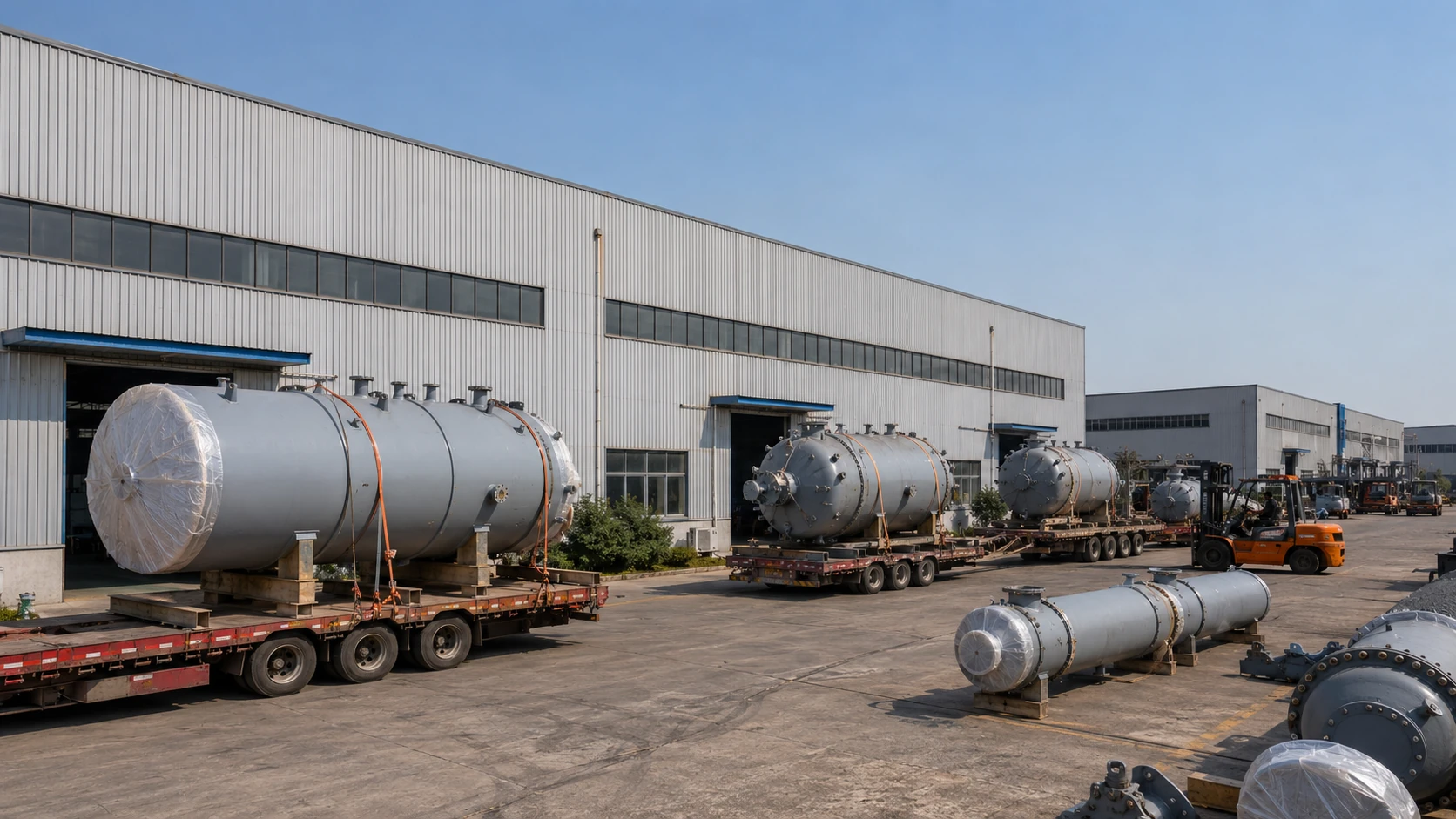
Prepare the equipment for delivery and the next project stage.
The finished configuration is prepared for delivery with suitable protection and the supporting documentation needed for the next project interface.
Discuss the equipment you need manufactured.
Share the equipment type, process conditions, required capacity and any available specifications or drawings.