Process Equipment
for Corrosive
Chemical Duty
Glass-lined reactors, vessels and supporting process equipment for reaction, storage, mixing, separation and thermal control.
Equipment configurations are developed around actual process requirements.
Equipment at the
Core of the Process
Glass lined reactors, storage vessels and agitation systems form the core of many corrosive chemical processing lines. Each equipment type should be selected as part of the overall process rather than as an isolated vessel.
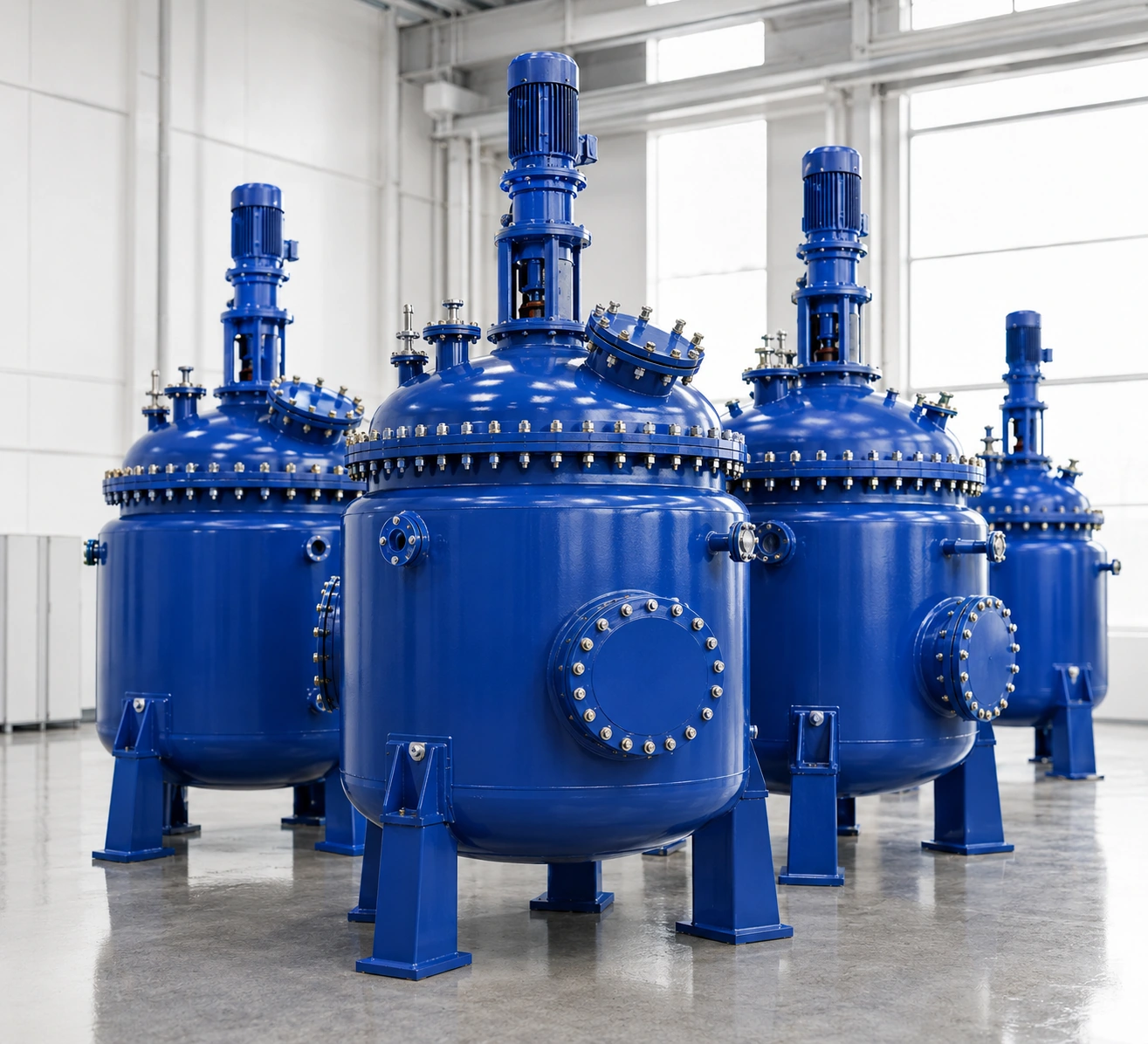
Glass-Lined Reactors
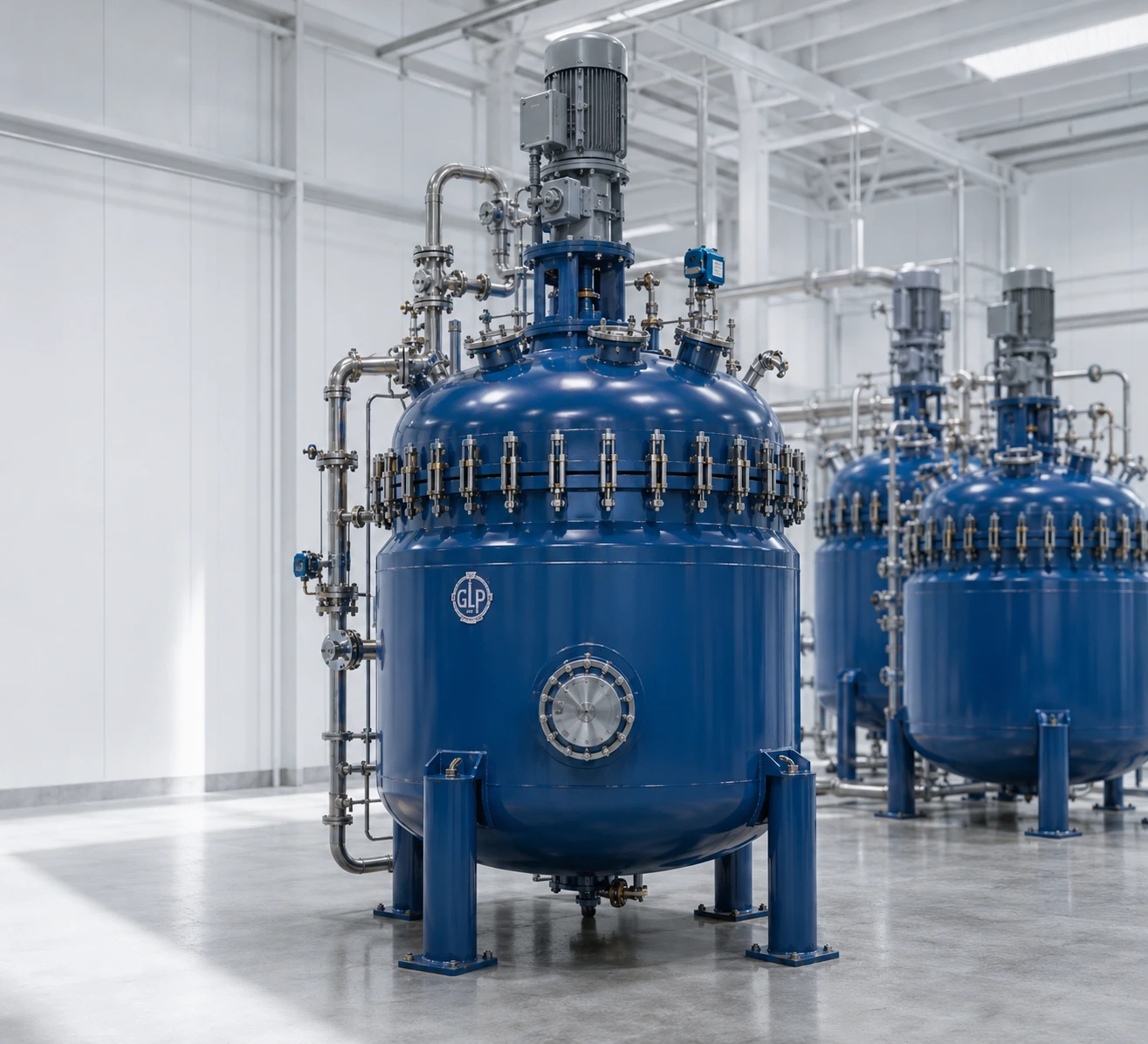
Glass-lined reactors combine the mechanical strength of a steel vessel with a corrosion-resistant glass-lined product-contact surface.
They are used for chemical reaction, blending, dissolution, crystallization and other batch process duties involving corrosive media.
Working volume, chemical compatibility, temperature, pressure or vacuum, agitation and thermal duty all influence the final reactor configuration.
Reactor selection should also be coordinated with the required agitation and mixing configuration .
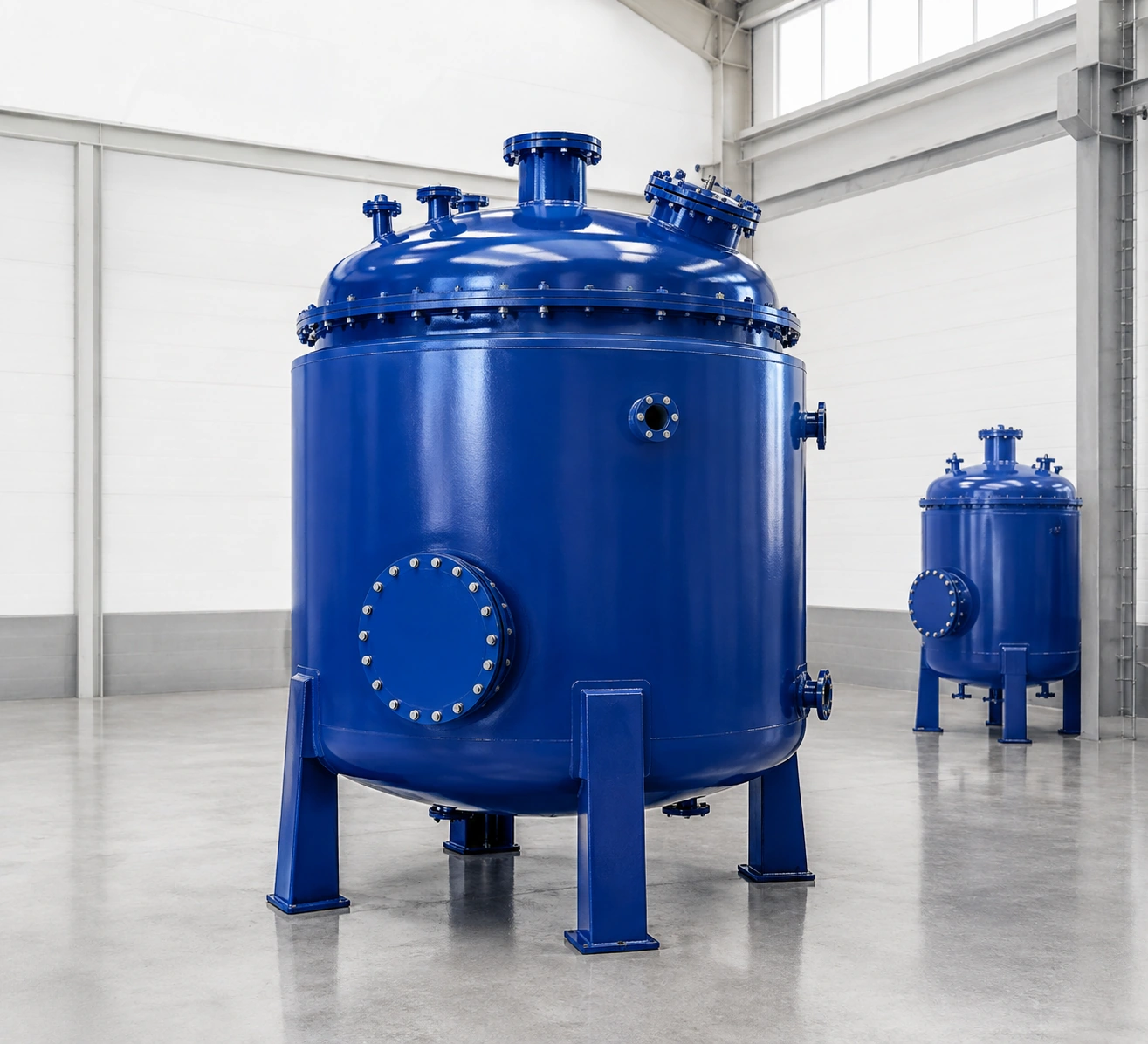
Glass-Lined Storage Vessels
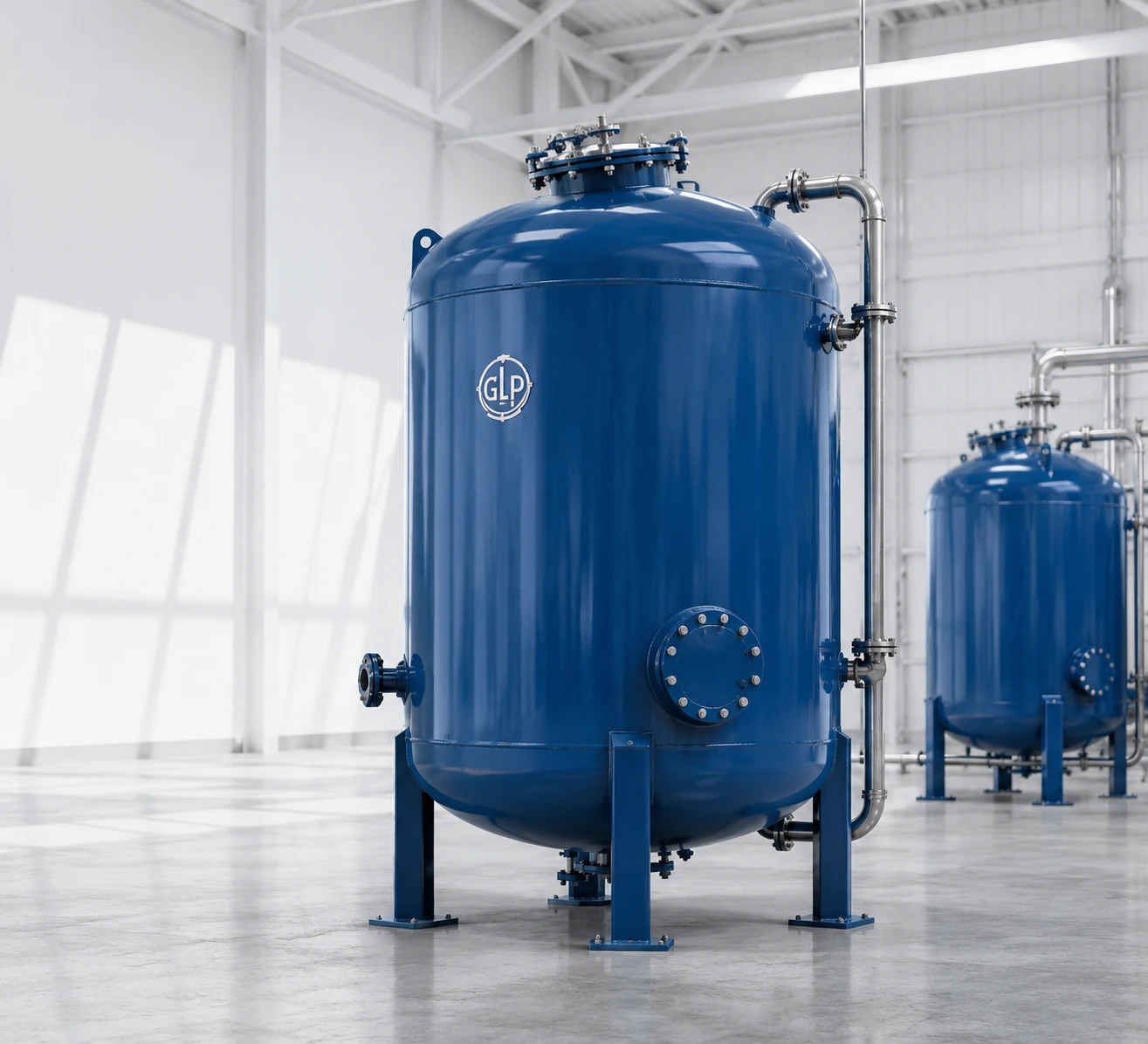
Glass-lined storage vessels provide corrosion-resistant containment for process media, feed materials, intermediate products and aggressive liquids.
They can be used for feed preparation, temporary storage, process buffering, receiving and transfer duties.
Nozzle arrangement, working volume and connection requirements should be confirmed according to the actual plant process.
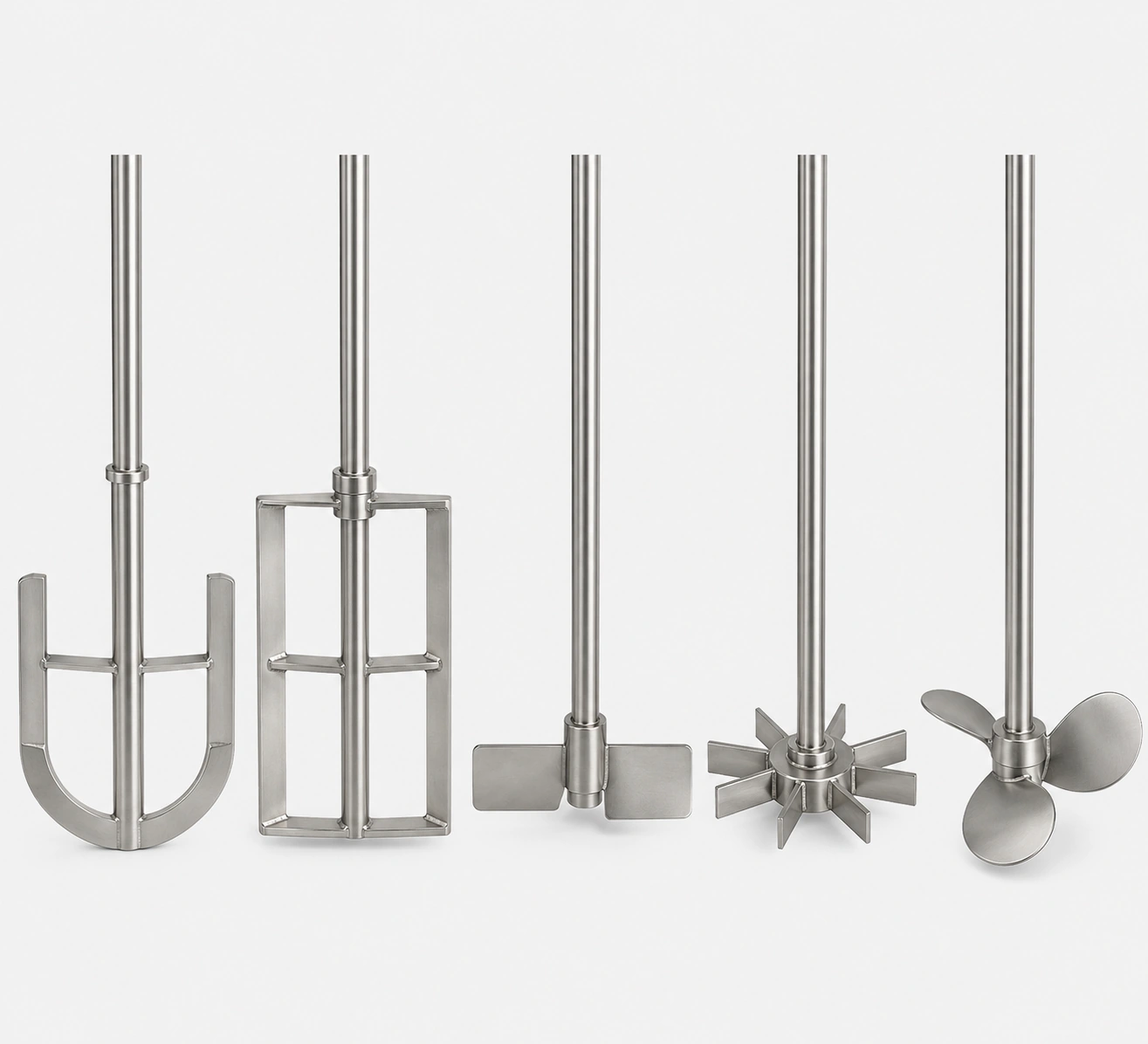
Agitation & Mixing
Agitation is a process function rather than simply a reactor accessory.
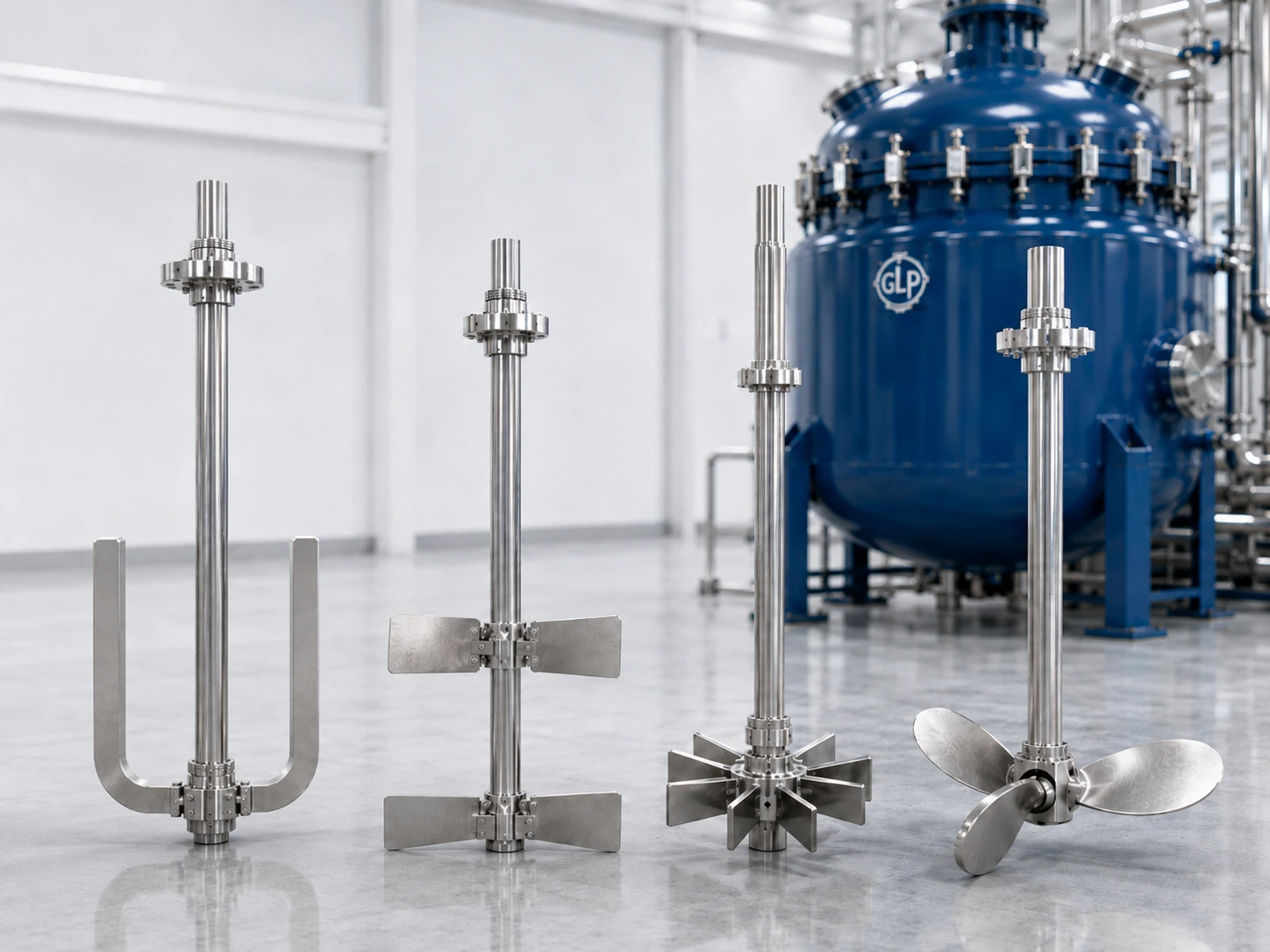
Impeller type, shaft arrangement, speed and mixing intensity influence blending, suspension, dissolution, heat transfer and reaction performance.
The appropriate configuration depends on the process medium, viscosity, solids content, vessel geometry and operating objective.
Review our agitation configuration guidance for additional selection considerations.
More Process
Equipment
Supporting equipment completes the product range around reactors and storage vessels.
Distillation & Condensation Equipment
Vapor condensation, solvent recovery and separation duties.
Glass-Lined Columns
Separation, absorption and related chemical process duties.
Glass-Lined Pipes & Fittings
Transfer of corrosive media between process equipment.
Stainless Steel Reactors
Reactor systems for duties suited to stainless construction.
Parts & Accessories
Components for reactor systems, agitation and process connections.
Equipment Selection
Starts With the Process
Choosing chemical process equipment by vessel size alone can lead to an unsuitable configuration. Selection should begin with the operating conditions and process objective.
Find Equipment by
Process Role
Use the process objective to identify the equipment categories typically involved.
Reaction
Glass-Lined Reactors; Stainless Steel Reactors
Storage
Glass-Lined Storage Vessels
Mixing
Agitation & Mixing
Separation
Distillation & Condensation; Glass-Lined Columns
Heat Transfer
Jacketed Reactors; Condensation Equipment
Equipment as
One Process Arrangement
A reactor rarely operates alone. Reactors, vessels, agitation systems, condensers, columns and piping should be considered as part of the complete process arrangement.
Feed Preparation
Reaction
Condensation
Separation / Receiving
Storage / Transfer
Equipment for Chemical
Process Industries
Explore the industries where glass-lined chemical process equipment is applied.
Not Sure Which Configuration
Fits the Process?
Start with the main process conditions and we can evaluate the appropriate equipment direction.