
Glass-Lined Reactors & Vessels
Glass lined reactors and vessels combine a corrosion-resistant product-contact surface with robust steel vessel construction for chemical reaction, storage, feed preparation and intermediate process duties.
The appropriate equipment configuration depends on what must happen inside the vessel — reaction, mixing, thermal control, containment or transfer — together with the actual operating conditions.
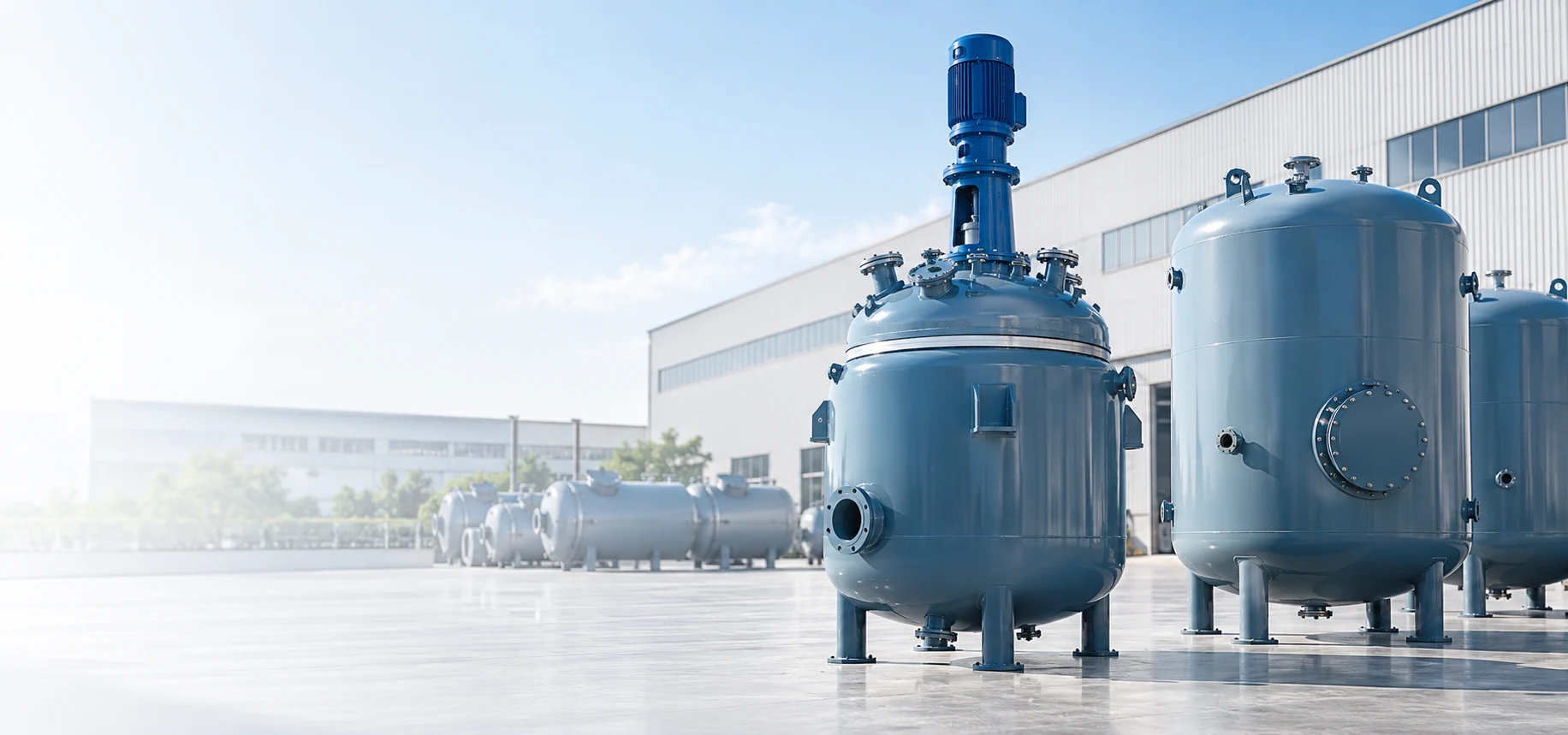
Equipment for Reaction and Storage Duties
Reactors and vessels may share similar construction principles, but their process roles are different. Equipment selection should begin with the required duty rather than vessel appearance alone.
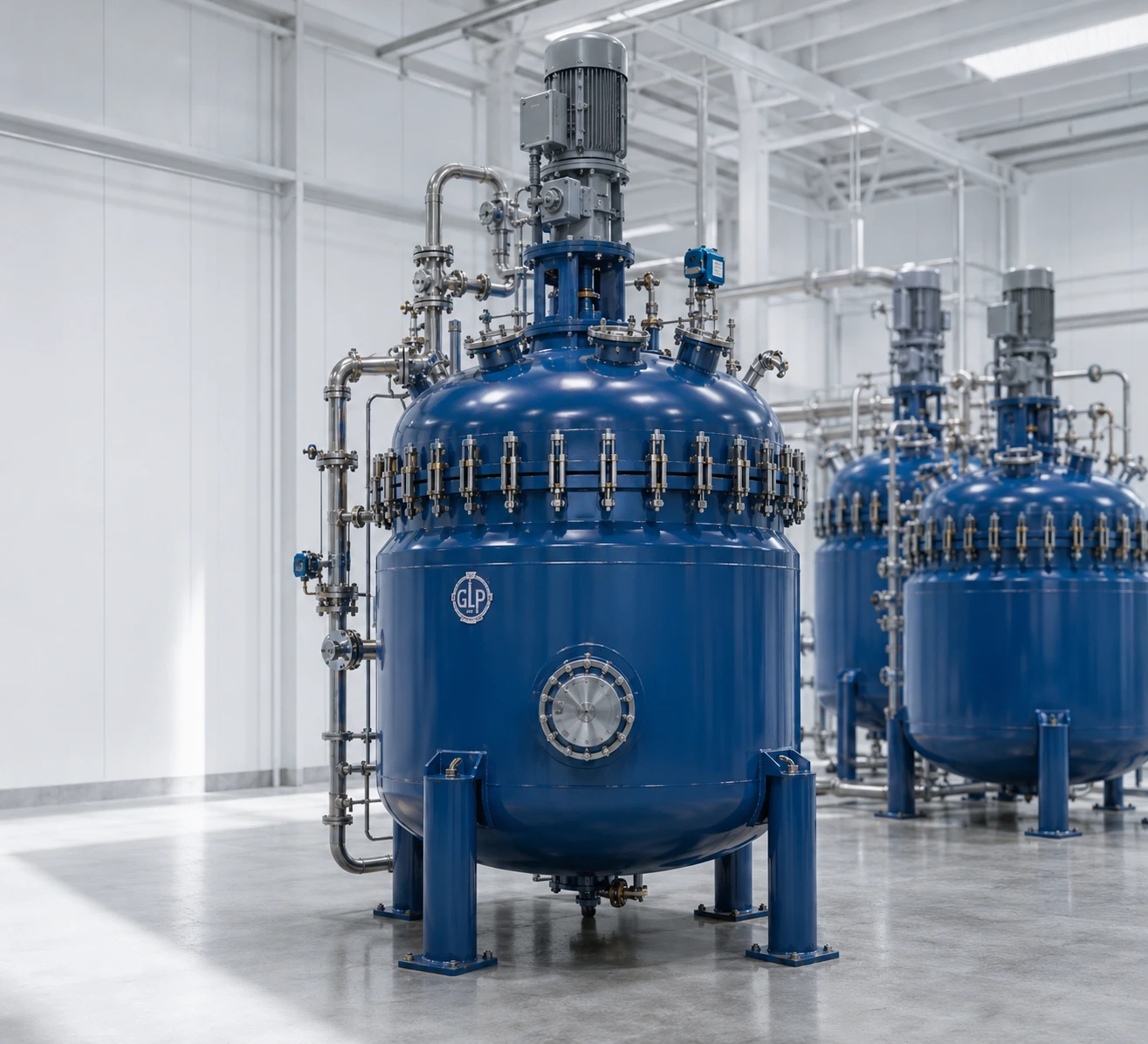
Glass-Lined Reactors
Glass-lined reactors are used where the vessel must support an active process duty such as chemical reaction, blending, dissolution, crystallization or controlled batch processing.
Reactor configuration is influenced by the working medium, operating volume, temperature, pressure or vacuum, agitation requirement and heat-transfer duty.
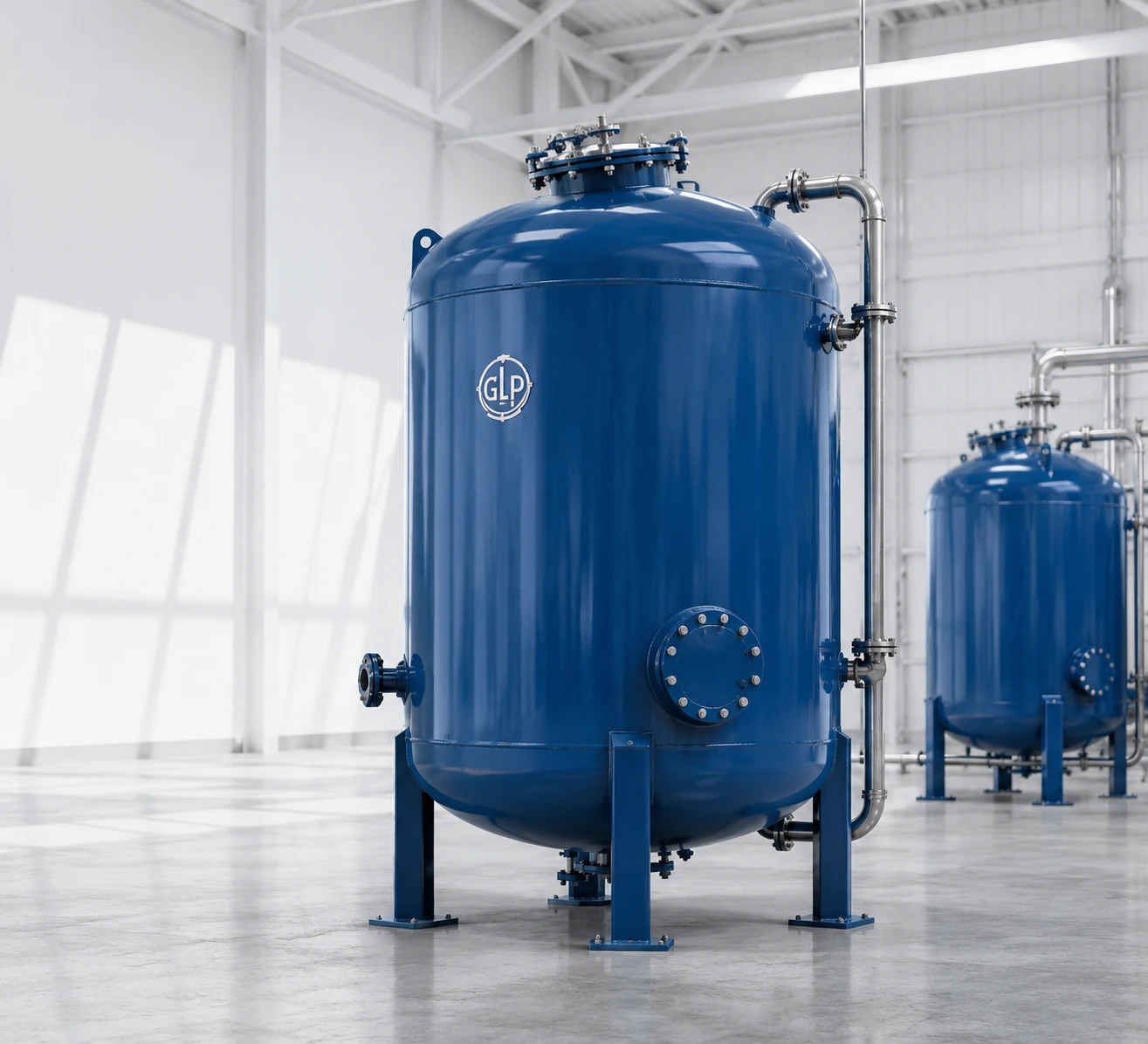
Glass-Lined Storage Vessels
Glass-lined storage vessels provide corrosion-resistant containment for feed materials, process intermediates and aggressive liquids used within chemical processing systems.
They can support feed preparation, temporary storage, receiving, process buffering and transfer duties according to the required volume and plant interfaces.
Stainless Steel Reactors
For process duties where stainless steel is the appropriate construction material, reactor configuration can be reviewed separately from glass-lined equipment according to the medium and operating requirement.
Reaction Vessel or Storage Vessel?
The distinction begins with the process duty. A reactor is configured around what must happen inside the vessel, while a storage vessel is primarily configured around containment, receiving and transfer requirements.
Reactor
- Primary role
- Active chemical or physical process duty
- Typical considerations
- Reaction requirement; agitation; heating / cooling; pressure / vacuum; feed and discharge arrangement
Storage Vessel
- Primary role
- Containment and process material handling
- Typical considerations
- Working capacity; medium compatibility; receiving / transfer duty; nozzle arrangement; plant interfaces
Some vessel duties may also require agitation or thermal control. Final configuration should therefore be based on the actual process rather than the equipment name alone.
Define the Vessel Around the Process
Before selecting a reactor or storage vessel, the main operating conditions and process interfaces should be defined for engineering review.
PROCESS MEDIUM
Chemical compatibility and product-contact requirement
WORKING CAPACITY
Required operating volume and process quantity
TEMPERATURE
Operating temperature and heating / cooling duty
PRESSURE / VACUUM
Required operating condition
AGITATION
Mixing objective where applicable
INTERFACES
Nozzles, access, utilities and process connections
Reactors and Vessels Within the Process
Reaction and storage equipment often operate as connected parts of the same process arrangement rather than as isolated vessels.
Feed Preparation
Glass-Lined Vessel
Reaction
Glass-Lined Reactor
Intermediate / Receiving
Glass-Lined Vessel
Storage / Transfer
Glass-Lined Vessel / Process Interfaces
Equipment for Corrosive Chemical Process Duties
The equipment role and engineering emphasis change with the chemistry, operating conditions, mixing behaviour and thermal duty of each application.
Equipment Configuration Starts With Process Data
Capacity alone is not enough to define a reactor or vessel. Medium compatibility, operating conditions, agitation, thermal duty and process interfaces should be reviewed together before the equipment basis is finalized.
Reactors & Vessels — Common Questions
What is the difference between a glass-lined reactor and a storage vessel?
A glass-lined reactor is configured around an active process duty such as reaction, mixing or temperature control. A storage vessel is primarily configured for containment, receiving, buffering or transfer. The final configuration depends on the actual operating requirement.
Does every glass-lined reactor require the same agitation system?
No. Agitation depends on the mixing objective, product behaviour, vessel geometry and process conditions. It should be reviewed as part of the reactor configuration.
What information is needed to select a reactor or vessel?
The main inputs include process medium, required capacity, operating temperature, pressure or vacuum, agitation requirement where applicable, heating or cooling duty and required process connections.
Can GLP review an existing reactor or vessel specification?
Yes. Existing specifications, datasheets and drawings can be used as a starting point for technical clarification and equipment review.
Start With the Equipment Duty
Send GLP the available process information, required capacity and any existing specification or drawing. The equipment direction can then be reviewed around the actual reaction or storage duty.