
02.01 / Glass-Lined Reactors
Glass-Lined Reactors
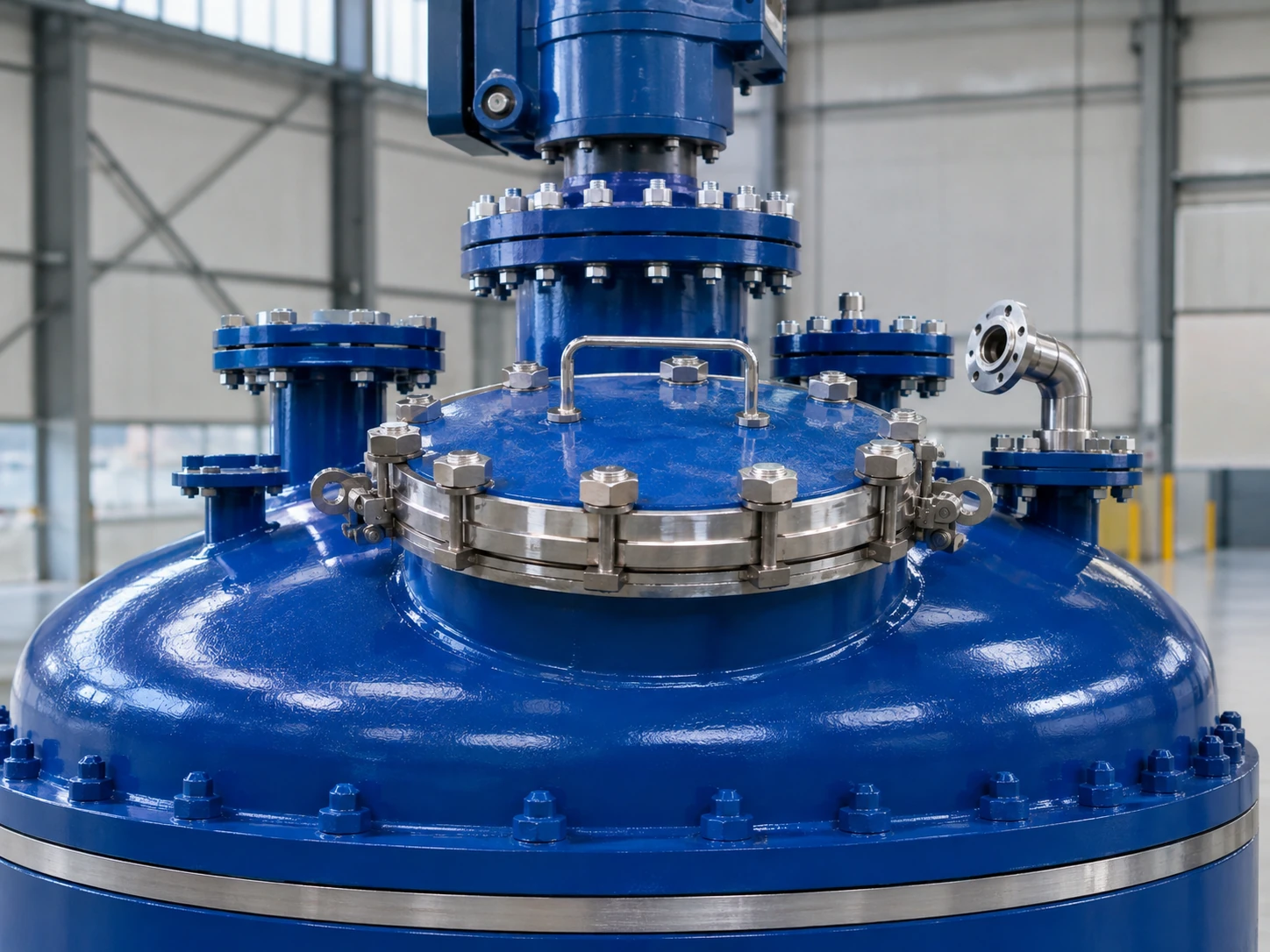
As a glass lined reactor manufacturer, GLP supplies glass-lined reactors for chemical, pharmaceutical and specialty-process projects where corrosion-resistant product contact, agitation, heat transfer and process interfaces must be reviewed together.
New equipment and replacement discussions can start from process data, an existing specification, GA drawing, equipment nameplate or the interfaces that must be matched.
ON THIS PAGE
Product Role
Build the reaction system around the duty.
Reaction Environment
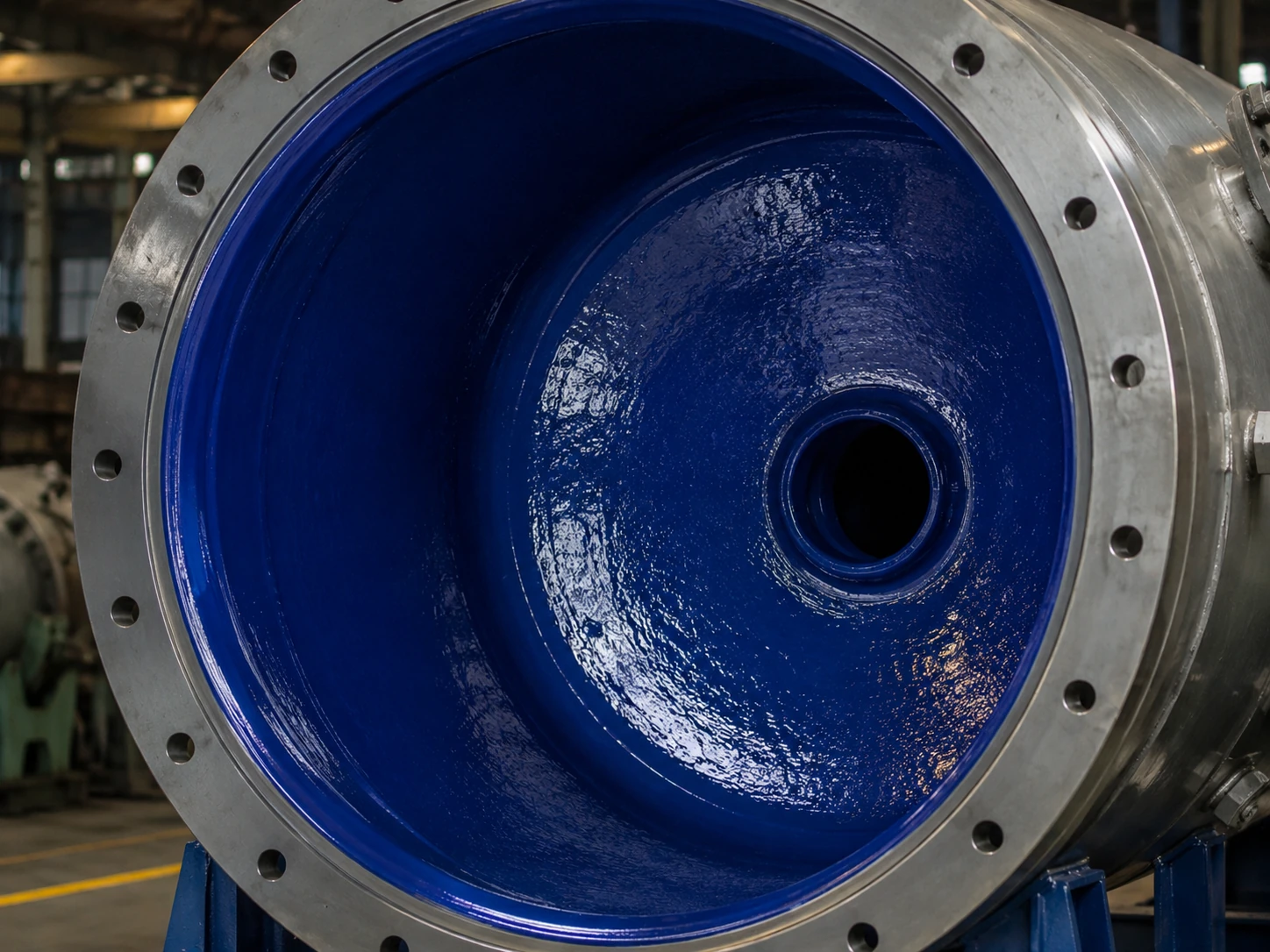
Use a corrosion-resistant glass-lined product-contact surface where the confirmed process medium and operating conditions are compatible with glass-lined equipment.Integrated Equipment Basis
Coordinate the vessel with agitation, heating or cooling, access, nozzles and connected equipment identified during project review.Main Configurations
Configuration follows the process context.
01 / DUTY
Reaction Vessel Arrangement
Define the reactor role, required capacity or working volume basis, process sequence and relationship with surrounding equipment.02 / MIXING
Agitation Integration
Match the mixing objective with the agitator arrangement, shaft, drive and vessel interface.03 / THERMAL
Heating / Cooling
Review the required heating or cooling duty together with the available thermal medium and reactor arrangement.04 / ACCESS
Access & Maintenance
Consider manway or access requirements, cleaning approach and maintenance access during equipment review.05 / CONNECTIONS
Nozzle / Interface Configuration
Match process connections, nozzle requirements and surrounding piping or equipment interfaces.06 / OPERATION
Pressure / Vacuum Context
Confirm operating and design pressure or vacuum information when available instead of assuming a standard rating.Process / Selection Factors
What information defines a glass-lined reactor project?
| Buyer Input | Why It Matters | Equipment Review |
|---|---|---|
| Process medium | Chemical compatibility and product-contact environment | Glass-lined suitability and wetted-surface review |
| Required capacity / working volume | Defines the basic vessel duty and batch context | Reactor configuration basis |
| Reaction duty | Explains what happens during the process cycle | Vessel and equipment relationship |
| Viscosity / solids, if applicable | Changes circulation and mixing behaviour | Agitation review |
| Operating temperature | Defines the thermal operating context | Heating / cooling basis |
| Operating or design pressure / vacuum | Defines the mechanical operating context | Vessel configuration review |
| Heating / cooling requirement | Defines how thermal control is expected to work | Jacket / thermal interface review |
| Nozzles and process connections | Affects piping and equipment interfaces | Nozzle / connection review |
| Existing specification / drawing | Provides a reference for replacement or matching | Interface and replacement review |
Need help organizing the project basis?Process Data & Equipment DefinitionExisting Specification & Replacement Review
Construction / Interfaces
Keep product contact and equipment integration visible.
Product Contact
Reactor Vessel
Agitation / Thermal Duty
Process Interfaces
Manufacturing & Inspection
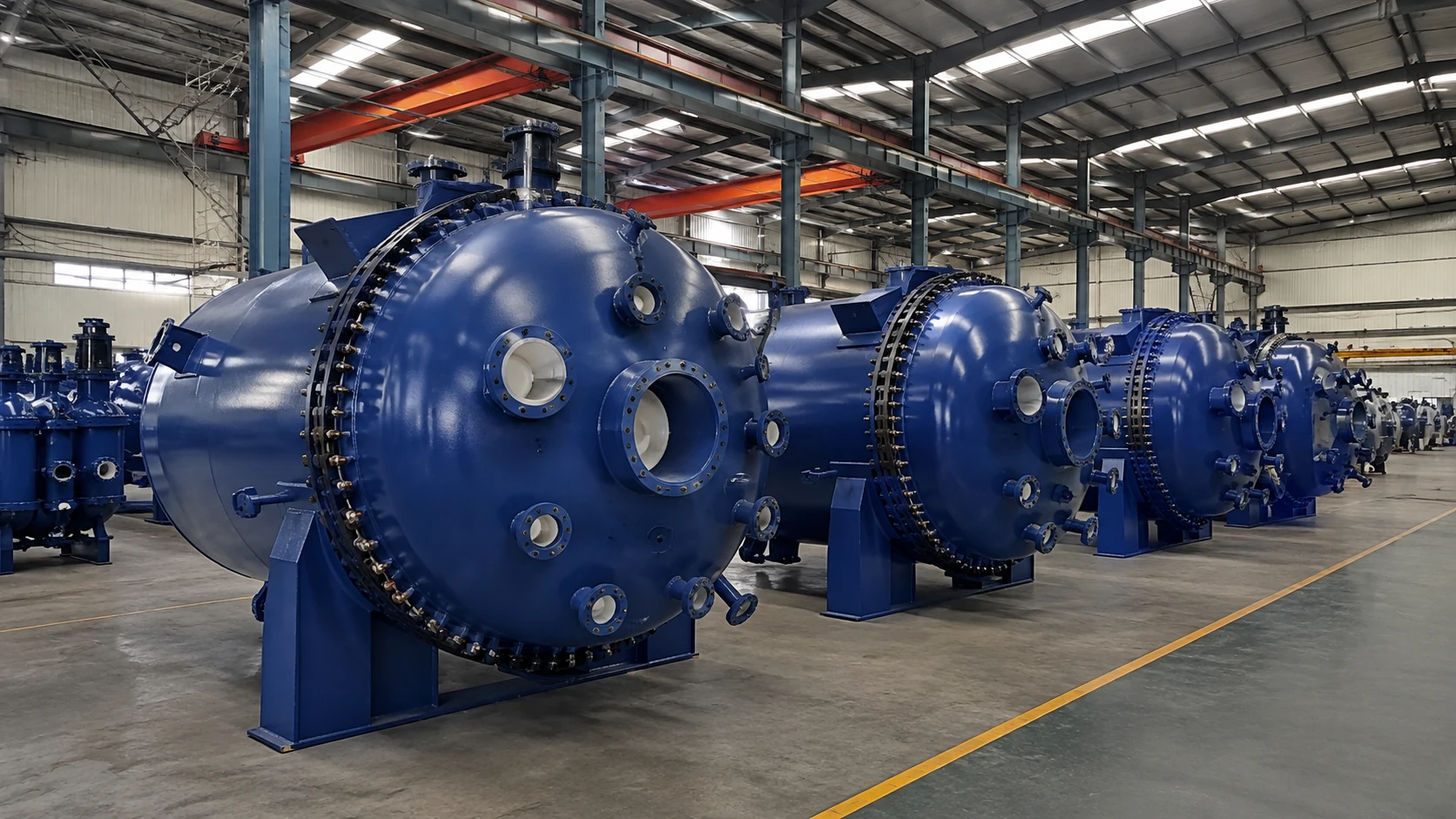
Connect reactor configuration with manufacturing control.
Applications
Reactor requirements follow the application.
Pharmaceutical Processing
Support reaction and blending duties where product-contact compatibility and process control matter.Specialty Chemicals
Coordinate reactor configuration with changing material and operating conditions.Fine Chemicals
Connect reaction objectives with agitation, thermal and access requirements.Agrochemical Processing
Review corrosive process media and equipment interfaces around the reaction duty.Resins & Polymers
Consider process changes and mixing needs across the reaction cycle.Process Development
Keep early reactor decisions connected to scale-up and engineering review.Engineering Inputs
Turn available project data into a reviewable reactor basis.
01
Process Description
Reaction objective, process medium and operating sequence.02
Operating Context
Temperature, pressure or vacuum, thermal requirement and other available operating conditions.03
Equipment Interfaces
Connections, access, agitation, drive and surrounding process equipment.RFQ Information
What to send for a glass-lined reactor quotation.
Project / equipment information
- New equipment or replacement project
- Required quantity
- Required capacity or working volume, if known
- Existing model or specification, if applicable
Process information
- Process medium
- Reaction duty
- Operating temperature
- Operating or design pressure / vacuum, if available
- Viscosity or solids information, if relevant
Equipment interfaces
- Agitation requirement
- Heating / cooling requirement
- Nozzle or connection requirements
- Existing GA drawing, nameplate or interface dimensions, if available
Commercial / delivery information
- Project destination
- Required delivery term, if already defined
- Required documentation or inspection scope, if specified
FAQ
Questions for a reactor review.
What are glass-lined reactors used for?
They are used for suitable chemical reaction and related batch process duties where the process requires a corrosion-conscious product-contact surface.How does agitation affect reactor selection?
Agitation supports movement and contact inside the vessel. The mixing objective, agitator arrangement and reactor interface should be reviewed together.Should heating and cooling be considered with the reactor?
Yes. Thermal control is part of the overall reactor equipment basis and should be reviewed with the process duty and circulation requirements.What information is needed for a glass-lined reactor inquiry?
Share the process medium, reaction duty, required capacity or working volume, operating temperature, pressure or vacuum context, agitation objective, thermal requirements and equipment interfaces. Existing specifications, drawings or nameplate data are useful for replacement projects when available.Can GLP review an existing glass-lined reactor for replacement?
Yes. A replacement review can begin from an existing specification, GA drawing, nameplate, nozzle arrangement, interface dimensions or other available equipment data. The goal is to identify the interfaces and operating basis that need to be matched before a replacement configuration is confirmed. See the replacement review.Is a glass-lined reactor suitable for every chemical process?
No. Suitability depends on the process medium, concentration, temperature, operating conditions and the compatibility limits of the glass-lined product-contact surface. Chemical compatibility should be reviewed for the actual process rather than assumed from the equipment type alone.Project Inquiry